Lees hierdie artikel in Afrikaans
You planted on time. The seed went in well. Then a hard rain came through, the sun came out, and the top of the land dried into a crust. Now the seedlings are pushing against a lid, and some of them aren’t getting through.
That’s where a roleg (rol-eg) earns its place. It breaks the surface crust over the planted row so the seedling can come up. No deep work, no turning the soil. Just opening the lid.
But before you hitch one up, you need to know two things: is a crust really what’s stopping your plants from coming up, and does the implement match the rows you planted? This guide covers both, plus what to check before you ask for a quote.
Is Soil Crust Really the Problem?
Don’t decide from the bakkie that the land needs a roleg. Walk the planted row and look at what’s holding the seedling back.
Surface Crust vs Deep Compaction
These are two different problems, and they need two different tools.
- Surface crust: the problem is right on top. Hard rain beats the top of the soil flat. When it dries fast, it sets into a hard skin the seedling has to push through.
- Deep compaction: the problem is lower down, often an old plough layer (ploegblad) that stops the roots. A roleg won’t touch that. That’s work for a subsoiler or ripper.
If the seedlings are stuck under a hard skin on the row, a roleg is the right conversation. If the plants aren’t coming up for another reason, another pass over the land won’t fix it.
What the VZS Roleg Does
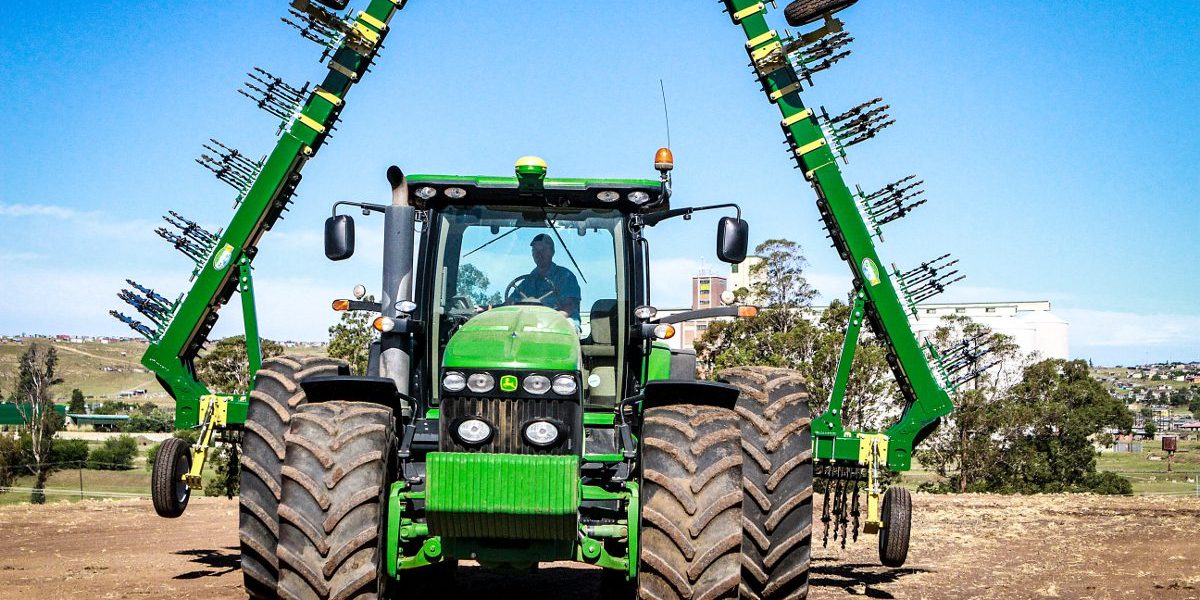
The roleg works over the planted row. Its wheels break the crust where the seedling needs to come through. The trick is to break the crust without hurting the young plant.
Independently Sprung Wheels
On our Roleg, every wheel sits on its own spring. No land is dead level. When the ground goes up or down, each wheel follows it by itself, so the unit doesn’t lift off in one spot and dig in at the next.
Units That Move, Tips You Can Replace
The units slide along the beam, so you set them to your rows. The finger tips on the wheels are replaceable. Two things worth checking on any roleg you buy: how it sets up on your rows, and which wear parts you can replace later.
VZS Roleg: Specs at a Glance
| Spec | VZS Roleg |
| Rows | 4 to 20 rows |
| Row widths | Different row widths available |
| Wheels per unit | 4 as standard, up to 6 possible |
| Wheel mounting | Each wheel on its own spring |
| Finger tips | Replaceable |
| Units on beam | Can be moved along the beam |
| Beam | Fixed or folding |
| Built in | Reitz, Free State |
See the full details on the Roleg product page.
Start With Your Planter, Not Just Your Tractor
“What tractor do you have?” is an important question. With a roleg, “How did you plant?” matters just as much.
You’re not simply buying a bigger or smaller implement. The wheels have to work in the right places against the rows you planted.
1. Your Row Width
Work from the actual distance between your planted rows. “It’s a 12-row planter” doesn’t tell us how far apart the rows are. We need both numbers to set up the roleg.
2. How Many Rows Per Pass
Look at how many rows your planter has and how many you want to do in one pass. A smaller roleg isn’t just the same job for less money. Its passes have to line up with the rows you planted. Sort that out before you buy.
3. Fixed or Folding Beam
We build the Roleg with a fixed or folding beam. Think past the work in the land. How will you move it between lands and on the road? Can your tractor lift the setup you choose? Decide row width, row count and beam together, not one at a time.
The question isn’t only “Can my tractor pull it?” It’s also “Does this setup fit the rows I have to work?”
The Working Window Is Decided in the Land
The crust is there. The seedlings need to come through. This isn’t the moment to start finding out whether an available roleg fits your planter.
But the calendar can’t decide for you. It’s not about how many days since planting. It’s about how hard the crust is, how far the seedling has come, and how wet or dry the soil is.
The job is to break the crust, nothing more. Get off the tractor and look. Are the wheels opening the crust? What’s happening to the seedlings? If the land looks good but the plants are damaged, the setting is wrong.
Roleg or Skoffel: Pick the Tool for the Job
The names get mixed up easily. Let the problem you’re solving drive the choice.
| Your problem | Implement to discuss with VZS | Where the work happens |
| A surface crust is holding seedlings back | Roleg | Over the planted row, breaking the crust |
| Weeds growing between the planted rows | Skoffelreeks (cultivator) | Between the rows, taking out weeds |
Our Skoffelreeks has adjustable depth and row widths, with 3- or 5-tine carriers. That’s a different buying decision from opening a crust over the row.
Wind and blowing sand is a different problem again. Don’t compare a standard Roleg and a Windry Roleg on their names alone. Tell us what you’re solving: crust over the row, weeds between the rows, or sand damaging young plants.
“Why Buy Something I Don’t Use Every Year?”
Fair question. A tapkar works every harvest. A roleg is different: you use it when the season calls for it. Some years you won’t need it at all.
But how often you use it is only half the story. The other half is having it when the crust is there. It might not work every year, but when you need it, you need it now.
We see it often: many farmers only buy once the crust is already on the land. Others replace a worn one before the season. Either way, you need the same answers: row width, row count and beam. If you only start phoning around once the crust is there, you still have to sort out the fit, find a unit and get it to the farm.
So ask early what’s available and when it can be with you. A roleg on your farm this week beats a promise of fast delivery.
Financing is also an option. VZS partners with Standard Bank on implement finance, so read our Standard Bank financing guide. If you need it in a hurry, remember the bank needs time to approve and we need time to deliver. Current terms and bank approval apply.
Buyer’s Checklist
Have these details ready before you ask for a quote:
- What did you see on the planted row, and why do you suspect a crust?
- What is your planter’s row width and row count?
- How many rows do you want to cover per pass?
- What stage is the crop at now?
- Which tractor will pull the implement?
- Do you need a fixed or folding beam?
- When and where do you need the implement?
That gives us a better starting point than “send me a price for a roleg”. The right quote has to fit the job.
Frequently Asked Questions
Can a roleg help when seedlings can’t get through a soil crust?
Yes. That’s what a roleg is for: breaking the crust over the planted row. First check that a crust is really the problem. Then set it up and time it for the land you’re working.
Is “roleg” the same as “rol eg”?
Yes, you’ll see both spellings. When you phone us, say what you need it for: breaking crust over the row. That way nobody confuses it with a roller or another implement.
How many rows are available?
Our Roleg range runs from 4 to 20 rows, with different row widths and fixed or folding beams. Your planter layout is the starting point for the right combination.
Can the finger tips be replaced?
Yes. The finger tips on the wheels are replaceable. Keep your implement details handy when you order parts so we can supply the right tips.
Do I have to work exactly three days after planting?
No. Look at the crust, how far the plants are, and how wet the soil is. The land tells you when, not a set number of days.
Is a roleg the same as a subsoiler?
No. A roleg works on top, over the row. A subsoiler breaks hard layers deep down. If the hard layer is under the surface, a roleg won’t help.
Get a Quote for the Right Roleg Setup
Don’t just ask for a price. Send us your planter’s row width and row count, your tractor details and what you’re seeing in the land. Then we can get to the right setup and current availability, instead of a quote that doesn’t fit your work.
Contact VZS, see the Roleg or browse our full implement range.