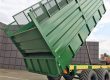
Maximizing Harvest Logistics & Field Efficiency: A Guide to High-Capacity Chaser Bins in South Africa
The clouds are building, the moisture meter says 12.5%, and your combine is running flat out. Then the grain tank fills up. Now your R4-million harvester has to stop, drive to the field edge, wait for a truck, unload, and drive back. That stop-start cycle can cost you 25% to 35% of your daily harvest capacity. When there’s a storm coming, that’s not an inconvenience. That’s money rotting in the field.
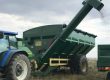
A chaser bin (tapkar) fixes this. It runs alongside your combine, takes the grain on the move, and shuttles it to the road trucks at the field edge. Your combine never stops. Your trucks never enter the field. Your harvest keeps moving.
But not every chaser bin is built for South African farming. This guide covers what to look for when you’re buying a high-capacity chaser bin in South Africa: the specs that matter, the ones that don’t, and the one question most buyers forget to ask.
The Real Cost of a Combine That Stands Still
Every farmer knows the frustration: the combine is running, the grain is coming off, and then everything stops because there’s no way to get the grain off the field fast enough.
The Problem with Trucks in the Field
Some operations try to solve this by driving bulk trucks straight onto the lands. It works until it doesn’t:
- Soil damage: A loaded 30-ton truck pushes massive weight through a narrow tyre track. That creates deep compaction below the plough layer. The kind that limits your maize roots for seasons. (We cover this in detail in our guide on why maize roots stop at 200mm.)
- Trucks get stuck: Road suspensions aren’t made for wet fields. One bogged truck and your whole harvest day is a recovery mission.
- Vehicle damage: Contour banks and corrugated farm tracks destroy road-going suspensions. You save time today, pay for repairs tomorrow.
The Cost of Stopping
If the combine drives to the field edge to unload instead, the threshing mechanism runs idle. Fuel burns, nothing gets harvested. On a 500-hectare maize operation at current grain prices, one lost harvest day can cost R150,000 to R250,000 in delayed delivery, extra drying, and weather exposure.
How a Chaser Bin Keeps Your Combine Running
The principle is simple: put a mobile grain buffer between the combine and the trucks.
Unload on the Move
The chaser bin pulls up alongside the combine while both are moving. The combine empties its tank into the bin without stopping. The threshing rotor keeps turning, the header keeps cutting. That alone gives you 25% to 35% more hectares per day.
Keep Trucks on the Road
The chaser bin carries the grain to the field edge and transfers it to your bulk trailer (massa sleepwa) in about 5 minutes. The road trucks never touch your fields. Your soil stays intact, your trucks stay in one piece.
VZS 31m³ Chaser Bin: Specs at a Glance
| Spec | VZS 31,000L / 31m³ Tapkar (V023) |
| Capacity | 31,000 Litres (31m³) |
| Discharge Rate | 6 Tons per Minute |
| Auger Diameter | 500mm |
| Drive System | Bondioli Pavesi Heavy-Duty Gearbox |
| Chassis | Heavy-Duty Double Frame (RHS structural steel) |
| Axles | Heavy-Duty Bogey Axle System |
| Tractor Requirement | 180 – 250 kW (240 – 340 hp) |
| Hydraulic Flow | ~100 – 120 L/min |
| Built In | Reitz, Free State |
| Parts Lead Time | Same day, on the shelf in Reitz & Frankfort |
Choosing a High-Capacity Chaser Bin: Key Technical Considerations
European chaser bins are built for flat, well-maintained fields with smooth roads between them. South African grain farms aren’t that. Our farm roads are corrugated, our contour banks are steep, the dust gets into everything, and the nearest dealer could be 200km away.
Here’s what actually matters:
Discharge Speed: Fast Enough, Not Fastest
The auger is the heart of the machine. Too slow, and the chaser bin sits at the road edge while your combine waits in the field with a full tank.
What to check:
- Auger diameter: 500mm is the benchmark for high-capacity bins. Bigger diameter means more grain moved per turn with less kernel damage.
- Discharge rate in tons per minute: This number needs to match what your silo can actually receive. An 18 t/min discharge rate sounds impressive, but if the silo’s intake belt runs at 6 t/min, you’re just smashing grain into a bottleneck. VZS runs at 6 t/min, perfectly matched to standard SA 30-ton bulk trailers and local silo intake speeds.
- Drive system: PTO-driven augers pull power from your tractor. A dedicated gearbox (like the Bondioli Pavesi on the VZS) runs independently, which saves your tractor’s PTO shaft over long harvest days.
Chassis: Built for Farm Roads, Not Highways
When you’re pulling 25 tons of grain across corrugated farm tracks and over contour banks, the chassis takes a beating. Every bump, every pothole, every uneven crossing puts twisting force through the frame.
Two approaches:
- Double-frame (VZS approach): Two parallel steel frames welded together with cross-bracing. Heavy, strong, built to take decades of rough farm roads without cracking welds or developing fatigue.
- Lightweight high-tensile frame (European approach): Designed to flex rather than resist. Lighter, faster on smooth fields. Not built for the kind of punishment South African farm roads dish out year after year.
If your farm roads look like most Free State farm roads, you want the double frame.
Axles: Keeping All Wheels on the Ground
A loaded chaser bin crossing a contour bank at speed needs every wheel on the ground. If a wheel lifts, the load shifts, and you’ve got a stability problem.
Bogey axle systems (like the VZS) use a walking-beam pivot that keeps all four wheels in ground contact over uneven terrain. The load distributes evenly, and there’s less stress on the tractor’s drawbar.
Telescopic axle systems (like the Horsch Titan) let the wheels slide outward to widen the track. This puts the tyres on fresh soil instead of in the tractor’s tracks. Brilliant for controlled traffic farming (CTF). It’s a world-class feature for farms that run CTF programs, but it adds mechanical complexity.
Tyres: Ground Pressure Is the Number That Matters
On Free State and North West sandy-loam soils, standard ag tyres concentrate 25 tons into narrow tracks and create deep ruts that compact the subsoil layer.
High-flotation tyres (800/65 R32 or 900/60 R32 radials) spread that load across a much wider footprint. Less ground pressure per square centimetre means less compaction, fewer ruts, and better ability to keep running when conditions are wet.
When you’re comparing chaser bins, ask for the ground pressure spec at full load, not just the tyre size. Two bins with the same capacity can put very different pressure on your soil.
Electronics: Useful, But Think About What Breaks
Top-end European chaser bins offer ISOBUS-integrated weighing systems that send real-time grain weight data to the tractor cabin and feed yield mapping software. Genuinely useful if you run precision farming programs.
But think about this: it’s 38°C, there’s dust everywhere, and something in the electronic system throws a fault code. The nearest technician who can diagnose it is in Bloemfontein, and your harvest window is 48 hours. Mechanical simplicity has real value when you can’t afford downtime.
South African Grain Cart vs Imported Platforms: Total Cost of Ownership
European manufacturers have set real benchmarks. We respect that. Here’s an honest look at what each does well.
Where European Engineering Leads
Machines like the Horsch Titan 34 UW have genuine strengths:
- Speed: Up to 18 tons per minute discharge rate. If you’re running three combines on a mega-farm, that speed matters.
- Soil preservation: The telescopic axle widening the track by 60cm is the best CTF solution in the market.
- Digital integration: Built-in ISOBUS weighing and yield mapping. Seamless if your operation is wired for it.
These machines are exceptional for what they’re designed for: large European estates with flat fields, smooth roads, and dealer workshops within an hour.
Where VZS Wins on South African Farms
Our reality is different:
- Our farm roads break things. The double-frame chassis on the VZS is built specifically for corrugated tracks, steep contour banks, and the kind of terrain that cracks lightweight frames over time.
- Dust kills electronics. Fine Highveld dust gets into everything. Mechanical systems keep working. Electronic systems need technicians.
- Parts win harvests. When your chaser bin goes down during peak season, the question isn’t which machine has better specs. It’s which manufacturer can get you a replacement part today. VZS keeps parts on the shelf in Reitz and Frankfort. An imported machine might need parts shipped from Germany, cleared through customs, and freighted to your farm. That delay can cost more than the price difference between the two machines.
- No import premium. No duties, no exchange rate risk on spares, and service techs who speak your language and know your soil.
Browse the full VZS Bulk Grain Transporter range for detailed product pages and specifications. Vir Afrikaanse lesers, sien ons volledige Tapkar Kopers-Gids.
Side-by-Side Comparison
| Spec | VZS 31m³ Tapkar (V023) | Horsch Titan 34 UW |
| Capacity | 31,000 Litres (31m³) | 34,000 Litres (34m³) |
| Discharge Rate | 6 Tons/min | Up to 18 Tons/min |
| Drive System | Bondioli Pavesi Gearbox | PTO Drive |
| Chassis | Heavy-Duty Double Frame | Lightweight High-Tensile |
| Axles | Bogey (walking-beam) | Telescopic Single (±30cm/side) |
| Weighing | Mechanical | ISOBUS Integrated |
| Built In | Reitz, Free State | Schwandorf, Germany |
| Parts | Same day from Reitz | Import logistics + customs |
Bottom line: The Horsch is the better machine for mega-scale corporate farms with CTF, multiple combines, and European dealer access. The VZS is the better machine for South African commercial farmers who need durability on rough roads, local parts on the shelf, and a discharge rate that actually matches what their silo can handle.
The Question Most Buyers Forget: Where Are the Parts?
Farmers compare capacity, discharge speed, and price. Fair enough. But during peak harvest, your chaser bin is the only thing standing between your combine and a full stop.
If it breaks down, how fast can you fix it?
Ask every manufacturer:
- Where is your nearest parts warehouse?
- Can I get a hydraulic hose, gearbox seal, or auger bearing delivered same-day?
- During peak season, do you keep critical spares in stock?
VZS holds full parts inventory at Reitz and Frankfort. For most farms in the Free State, North West, and northern KZN, a critical part can be on your farm within hours.
For imported machines, a specialist component might need to be shipped internationally, cleared through customs, and freighted to your area. During harvest, those days add up fast.
Which Size Chaser Bin Do You Need?
Three things determine the right size:
1. Your Combine’s Output
A 12-row header fills the grain tank faster than an 8-row. Your chaser bin needs enough capacity to receive a full tank in one transfer without overflowing.
2. Your Tractor
A loaded 31,000-litre bin needs a tractor rated between 180 and 250 kW (240 to 340 hp), depending on terrain. Sandy-loam soils need more power because of the rolling resistance. Your tractor’s hydraulics must also deliver about 100 to 120 L/min to run the auger at full speed.
3. How Far You’re Carrying
The further the chaser bin has to travel between the combine and the road trucks, the more capacity makes sense. On a big operation, a 31m³ bin means fewer trips and more time alongside the combine.
VZS Range:
| Model | Capacity | Best For |
| VZS 20m³ Tapkar | 20,000 Litres | Smaller operations, short carry distances |
| VZS 26,500L Tapkar | 26,500 Litres | Mid-size operations, moderate combine throughput |
| VZS 31m³ Tapkar (V023) | 31,000 Litres | Large operations, high-output combines |
All three use the same Bondioli Pavesi drive system. Same service requirements, same parts availability. VZS also offers competitive implement financing through Standard Bank, so you can buy the machine your operation actually needs, not just the one your cash flow allows right now.
Buyer’s Checklist
Before you sign anything, check these:
- Chassis: Double-frame or single? Will it still be straight after 10 years on your farm roads?
- Gearbox and hydraulics: Recognised brands? Can your local workshop service them?
- Discharge rate vs silo intake: Does the speed match, or are you just bruising grain?
- Parts distance: How far is the nearest warehouse? Two hours is the maximum during harvest.
- Ground pressure: What’s the actual spec at full load? Not the marketing number. The real one.
- Warranty: What’s covered on the frame and welds?
- Track record: How many units run in your area? Can you talk to other farmers using one?
Frequently Asked Questions
What tractor do I need for a 31m³ chaser bin?
You need 180 to 250 kW (240 to 340 hp). Sandy-loam soil pushes you toward the higher end. Your hydraulics must deliver about 100 to 120 L/min for the auger.
How does a chaser bin reduce soil compaction?
By keeping heavy road trucks off the field. The chaser bin runs on high-flotation tyres (800/65 R32 or 900/60 R32) that spread the load wide. Your bulk trucks stay on the hard road where they belong.
What’s the difference between a chaser bin and a side tipper?
A chaser bin has an auger that actively moves grain out. A side tipper relies on gravity: it tips sideways and the grain flows out. Chaser bins are built for in-field work (combine to road edge). Side tippers are built for transport (field to silo).
How often does the auger need servicing?
It depends on throughput and grain type. Maize and wheat wear auger flights faster than soybeans. Inspect at the start of harvest and again halfway through. Follow the manufacturer’s schedule.
Can I use a chaser bin for anything other than grain?
It’s designed for free-flowing grain: maize, wheat, soybeans, sunflower, sorghum. Not suitable for root crops, wet silage, or anything that won’t flow through an auger